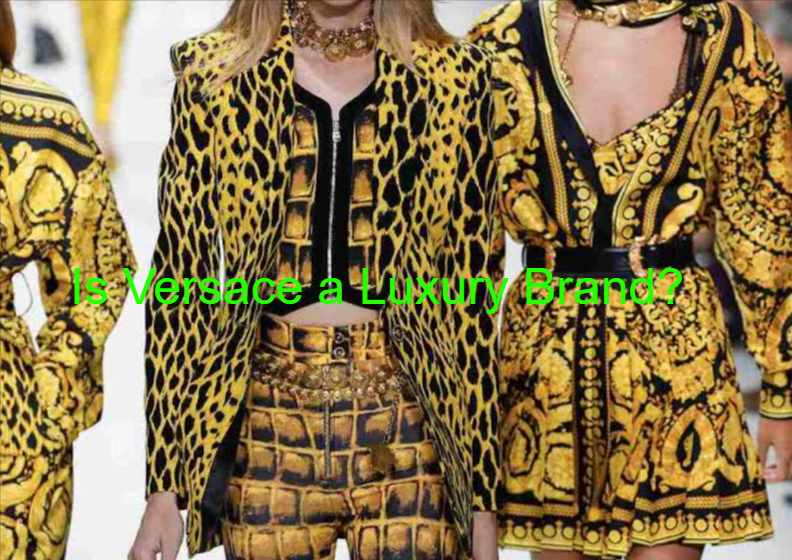
Yes, Versace is a luxury brand. It is an Italian fashion house founded in Milan in 1978 by Gianni Versace, known for bold prints, glamorous silhouettes and the Medusa head logo. It sits in the designer luxury segment, selling ready-to-wear, leather goods, footwear, accessories, eyewear and home products at premium prices through boutiques and selected retailers.
Versace is a “flashy” luxury label rather than a quiet-luxury one. Its appeal is loud, confident and tied to pop culture, which sometimes leads people to ask whether it is as prestigious as houses like Hermès or Chanel. The short answer is that it is a genuine luxury house, but one positioned below the ultra-elite tier.
Versace at a Glance
| Feature | Details |
|---|---|
| Founded | 1978, Milan, Italy, by Gianni Versace |
| Signature symbol | Medusa head logo, Greek key (Greca) and baroque prints |
| Category | Designer fashion, accessories, fragrance, eyewear, home |
| Current owner | Prada Group (acquisition completed December 2025) |
| Previous owner | Capri Holdings (acquired in 2018) |
| Creative director | Dario Vitale (appointed in 2025) |
| Price level | High (designer luxury), with accessible entries like fragrance and small goods |
| Distribution | Own boutiques, department stores, selected e-commerce |
| Luxury status | Yes, established designer luxury |
What Defines a Luxury Brand?
Luxury is about more than an expensive label. Most analysts look for a mix of these traits:
- Exclusivity: Controlled distribution and a limited number of retail points.
- Premium pricing: Prices that reflect prestige and craftsmanship, not just cost.
- Exceptional craftsmanship: High-quality materials and refined construction, often made in Europe.
- Heritage and storytelling: A recognisable founder, history and design language.
- Elevated experience: Boutique service, runway presence and strong brand image.
- Aspirational status: Owning the brand signals taste, wealth or confidence.
Versace meets most of these tests. It has a founder-led legend, instantly recognisable codes, runway presence at Milan Fashion Week, and manufacturing roots in Italy.
Pricing and Quality Comparison
Versace is priced as a designer luxury label. Ready-to-wear, handbags and shoes typically cost far more than high-street or premium brands, though less than the very top houses. Fragrances and small accessories offer a lower entry point for aspirational buyers.
| Segment | Example brands | Typical price level | What buyers pay for |
|---|---|---|---|
| Mass / high street | Zara, H&M | Low | Trend and affordability |
| Premium / accessible luxury | Coach, Michael Kors | Mid to upper-mid | Quality and branding |
| Designer luxury | Versace, Gucci, Prada | High | Design identity and prestige |
| Ultra-luxury | Hermès, Chanel | Very high | Craftsmanship, scarcity and heirloom value |
Quality:
Versace uses premium fabrics, leathers and detailing, and produces much of its range in Italy. Its strength lies in bold design, prints and embellishment rather than understated minimalism. Critics sometimes note that its resale value and heirloom appeal are lower than those of the very top houses, and it does not carry the same long-term value as a Hermès bag.
Market Positioning
Versace positions itself around glamour, boldness and Italian maximalism. Its strategy rests on a few pillars:
- Distinct aesthetic: Gold accents, vivid prints and sensual tailoring set it apart from the quiet-luxury trend.
- Pop-culture presence: Celebrities, musicians and red-carpet moments keep the brand highly visible.
- Brand codes: The Medusa head and Greca pattern are recognised worldwide.
- Diversified products: Fragrance, eyewear, jewellery and home lines broaden reach.
The brand’s ownership has changed significantly. Prada Group completed its acquisition of Versace from Capri Holdings on 2 December 2025, in a deal valued at roughly €1.25 billion, the largest in the group’s history. Reports said Versace had lost some lustre in recent years, and the move is meant to restore its performance and strengthen its position among Italian luxury groups. Prada has also begun integrating Versace into its Italian manufacturing network, which could support quality and exclusivity over time.
Why the confusion?
Versace’s bold, high-visibility style, together with licensing, fragrance and diffusion lines in the past, makes some shoppers see it as less exclusive than quieter houses. That is a question of positioning, not of whether it counts as luxury.
Frequently Asked Questions
Is Versace a luxury brand?
Yes. It is an established Italian designer luxury house.
Is Versace more expensive than Gucci?
Prices are broadly comparable at the designer level, depending on the product and season.
Who owns Versace now?
Prada Group, after completing the acquisition from Capri Holdings in December 2025.
Is Versace good quality?
Yes. It uses premium materials and Italian craftsmanship, with an emphasis on bold design.
Is Versace considered high-end?
Yes. It is high-end designer fashion, though below the ultra-luxury tier of Hermès or Chanel.
Does Versace hold its value?
Generally less than top-tier houses, though some iconic pieces and vintage items are collectable.
Is Versace worth buying?
If you love its bold aesthetic and want a statement piece, many buyers find it worthwhile.
Final Verdict
Versace is a true luxury brand with a strong identity, Italian heritage and global recognition. It leans toward glamour and showmanship rather than quiet exclusivity, and it is not in the same ultra-elite class as Hermès or Chanel. With Prada Group now at the helm, the house is entering a new chapter that may sharpen its positioning further.