Lenskart’s ambassador roster has grown into one of the more layered celebrity strategies among Indian consumer brands, moving from a single face to a theme-per-campaign model:
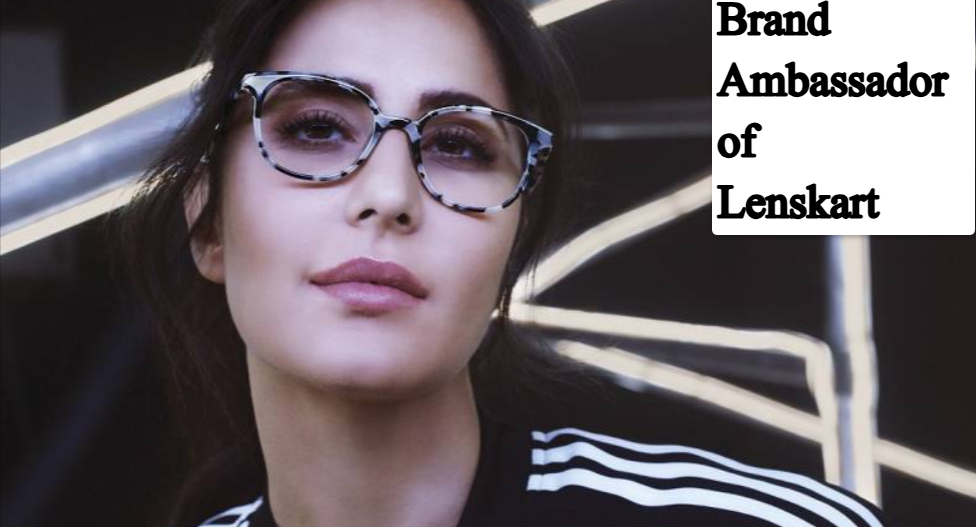
- Katrina Kaif (2017): Lenskart’s first-ever brand ambassador, signed on a two-year deal. Founder and CEO Peyush Bansal explained the pick as a fit with the brand’s proposition of “Addictive Playfulness,” drawing a playful link between her hit song “Kala Chashma” and the brand’s core product — chashma (spectacles).
- Bhuvan Bam (2019): Lenskart’s first male ambassador, signed as the YouTube star behind BB Ki Vines. His campaign tied directly to product — Lenskart’s #BBkeFrames collection, curated from his personal style, and the launch of the lightweight AIR eyewear range.
- Kiara Advani (2022): Fronted Aqualens, Lenskart’s contact lens line, built around themes of transparency and grace.
- Suryakumar Yadav (2023): Anchored the high-energy “Dhaakad” campaign, bringing sporting intensity to the brand’s messaging.
- Karan Johar: Represented a personal-style-centric angle, with campaigns built around the idea of transforming your look or vibe.
- DIVINE (2024): Fronted Lenskart’s Hip Hop-inspired eyewear collection, aligning street-culture credibility with a younger, urban audience.
- Vikrant Massey (2024): Partnered on the Lenskart AIR “Matte Essentials” collection, chosen for his versatility as an actor and reputation for confidence and authenticity.
Portfolio — History and Overview
- Origins (2008/2010): Lenskart traces its roots to 2008, when Peyush Bansal — after a pivotal conversation with Bill Gates while working at Microsoft — left his job in the US to build something meaningful in India. He co-founded the venture in November 2010 with Amit Chaudhary and Sumeet Kapahi (with sister Neha Bansal also a co-founder), initially under the parent entity Valyoo Technologies. The idea grew out of Bansal’s frustration with India’s fragmented, middleman-heavy, expensive eyewear-buying experience.
- Narrowing the focus (2014): Valyoo initially ran multiple e-commerce sites; by the end of 2014, the company shut the others down to focus solely on Lenskart.com and the eyewear category. Valyoo Technologies was renamed Lenskart Solutions in 2015.
- Brand expansion: Lenskart launched its own in-house eyewear label, John Jacobs, in 2017, broadening beyond a pure marketplace/retail model into brand ownership.
- International growth: In June 2022, Lenskart acquired a majority stake in Japanese eyewear brand Owndays in a cash-and-stock deal valuing it at roughly $400 million — after which the combined entity’s annual revenue reached about $650 million. In 2025, it acquired an 80% stake in Spanish eyewear brand Meller for over €40 million, later launching the brand in India.
- Scale today: Lenskart has grown from its early online-only, contact-lens-and-basic-eyewear roots to an omnichannel retailer with thousands of physical stores and a presence in around 15 countries — a rare feat for a non-fintech Indian startup to achieve global scale.
- IPO (2025): Lenskart Solutions went public with its issue opening October 31, 2025, raising ₹7,278 crore (a mix of fresh issue and offer-for-sale) at a price band of ₹382–402 per share, valuing the company at roughly $8–9 billion. The stock listed on November 10, 2025, after being subscribed more than 28 times, and the company turned profitable for the year ended March 31, 2025.
Ambassador Philosophy — Fashion, Technology, Identity
Lenskart’s ambassador strategy reflects three interwoven ideas the brand consistently returns to:
Fashion: Ambassadors are chosen to make eyewear feel like a style statement rather than a medical necessity — pairing celebrities known for personal style (Katrina Kaif, Karan Johar, Vikrant Massey) with product lines like AIR and Matte Essentials, positioning glasses as an everyday fashion accessory that can be swapped and styled.
Technology: Underpinning the fashion-forward image is Lenskart’s identity as a “technology-driven eyewear company” — spanning design, manufacturing, and retail, with innovations like 3D virtual try-on used to bridge the gap between an online-first shopping experience and the tactile, fit-sensitive nature of buying glasses.
Identity: Rather than one long-term face, Lenskart deliberately rotates ambassadors around sub-brands and personas — a contact lens line gets Kiara Advani’s polish, a hip hop collection gets DIVINE’s street credibility, a youth-digital push gets Bhuvan Bam’s content-creator relatability, and a sports-energy campaign gets Suryakumar Yadav. This “many faces, one brand” approach lets Lenskart claim a wide identity spectrum — playful, stylish, sporty, youthful, urban — while keeping founder Peyush Bansal (himself a recognizable face via Shark Tank India) as the consistent thread tying campaigns back to the brand’s core narrative.
FAQ
Q: Who was Lenskart’s first brand ambassador?
A: Katrina Kaif, signed in October 2017 on a two-year deal — the brand’s first-ever ambassador.
Q: Who was Lenskart’s first male brand ambassador?
A: Bhuvan Bam, signed in March 2019, known for his YouTube channel BB Ki Vines.
Q: Does Lenskart have one ambassador or several?
A: Several, run concurrently or in sequence, each tied to a specific product line or campaign theme — for example Kiara Advani for Aqualens, DIVINE for the Hip Hop collection, and Vikrant Massey for AIR Matte Essentials.
Q: Who founded Lenskart, and when?
A: Peyush Bansal, along with Amit Chaudhary, Sumeet Kapahi, and Neha Bansal, founded the company (as Valyoo Technologies) around 2008–2010, launching Lenskart.com as its eyewear-focused platform.
Q: What in-house brands does Lenskart own?
A: John Jacobs (launched 2017), plus international acquisitions Owndays (Japan, majority stake acquired 2022) and Meller (Spain, majority stake acquired 2025).
Q: Is Lenskart a public company?
A: Yes — Lenskart Solutions listed on Indian stock exchanges on November 10, 2025, after an IPO that raised ₹7,278 crore.
Q: What ties Lenskart’s varied ambassador choices together?
A: A consistent underlying philosophy — using fashion-forward personalities to make eyewear aspirational, backing it with a technology-driven customer experience, and using different ambassadors to represent different facets of the brand’s identity rather than a single fixed image.